Loading the marquee…
Directing
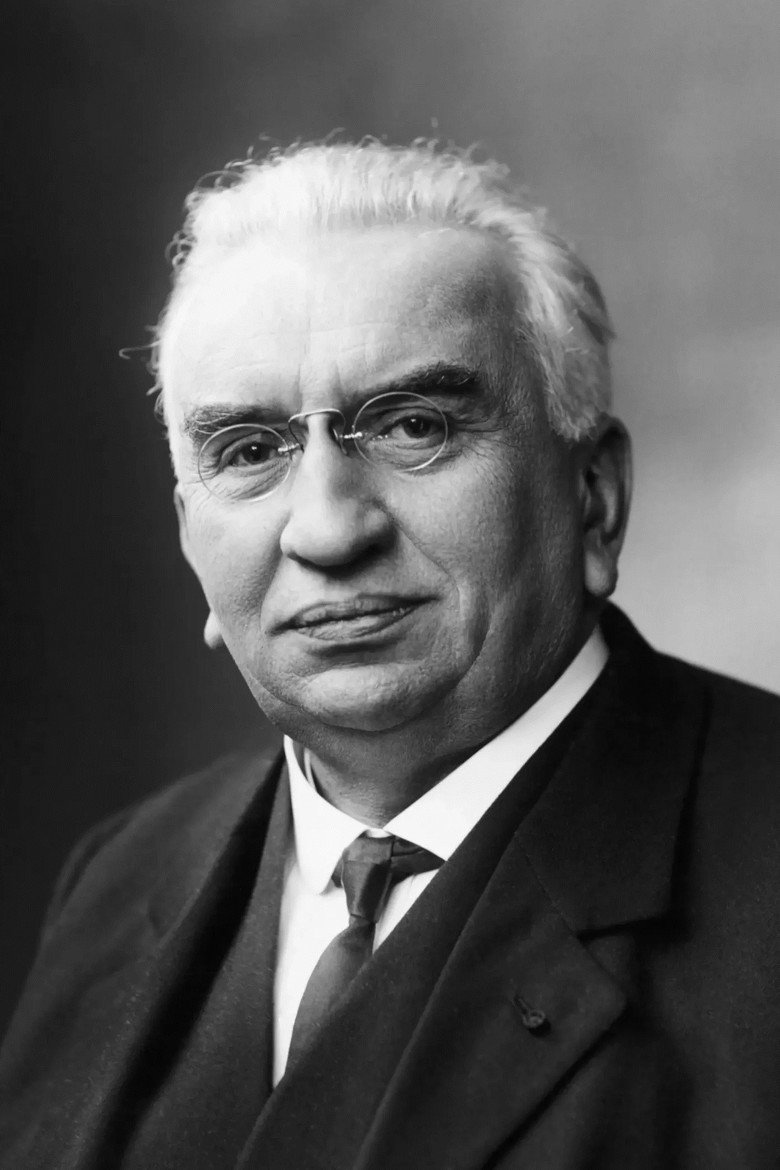
Louis Lumière
- Born
- Unknown
Awards
No awards listed yet.
Biography
Louis Lumière was a French inventor, manufacturer and early filmmaker whose name is inseparable from the public birth of projected cinema. Born in Besançon in 1864, he grew up in a family photography business founded by his father, Antoine Lumière. With his older brother Auguste, Louis was trained in science, mechanics and photographic processes in Lyon, where the family company became a major producer of photographic plates. That industrial and technical background mattered: the Lumières approached motion pictures not first as theatrical fantasy but as an extension of photography, optics and precision engineering.
The brothers' most famous invention was the Cinématographe, a lightweight machine that could function as camera, printer and projector. Earlier motion-picture devices existed, including Thomas Edison's Kinetoscope and other optical inventions, but the Lumière system helped make projected film practical for an audience. Louis is often credited with a central role in designing and operating the device. In 1895 the brothers filmed short actualities such as Workers Leaving the Lumière Factory, showing everyday movement with a clarity and immediacy that astonished contemporary spectators.
The key public moment came on 28 December 1895 at the Salon Indien du Grand Café in Paris, where the Lumières presented a paid program of short films. The screening included scenes of workers leaving the factory, a baby eating, a gardener being sprayed with water, street life and sea views. These films were brief, usually under a minute, but their realism, projection and shared audience experience made them foundational. The event is traditionally treated as a birth point of cinema as a public commercial medium, even though film history also includes many earlier inventors, experiments and exhibition systems.
Filmography

La primer imagen del mundo
as Louis Lumière · 2022 · Not rated yet

Les Deux Idiots
In Memory Of · 2021 · Not rated yet
Entrez Dans Le Garage!
In Memory Of · 2021 · Not rated yet
Arrivée
In Memory Of · 2021 · Not rated yet
Le cortège
Producer · 1903 · Not rated yet

Chirurgie mécanique
Producer · 1902 · Not rated yet
Armée indienne
Producer · 1901 · Not rated yet

Troupes coloniales
Producer · 1901 · Not rated yet
Community
Louis Lumière discussion
Community
Louis Lumière forum
Discuss Louis Lumière. By default, replies in a topic go to the original poster; use a message’s Reply button to reply to someone specific.
Sign in to post in the forum.
No forum topics yet. Start the conversation.


Most liked
Top comments